Boston to New York by Train: A Complete Travel Guide
Some links in this post are affiliate links, meaning I will earn a commission (at no extra cost to you) if you click through and make a purchase. For more info, please see my disclaimer.
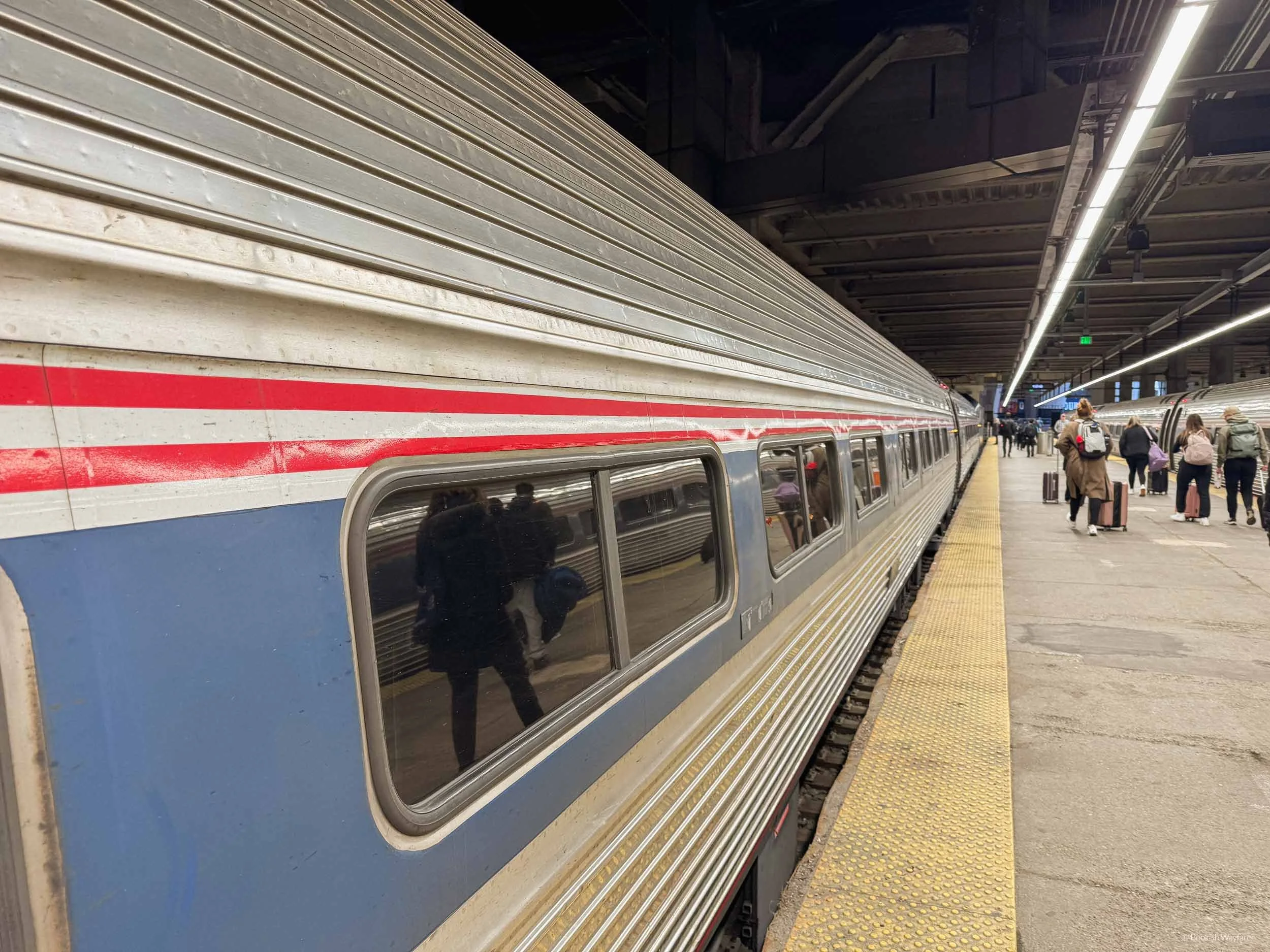
Whenever I need to travel from Boston to New York, I skip the plane and take the train. Sure, flying might be faster, but it’s also more stressful. You have to arrive at the airport early to allow time for security, and then wait at a gate to board your plane. And let’s not forget deplaning, a.k.a., the ninth circle of Hell.
Conversely, when you travel by train, you needn’t arrive terribly early, for there is no security. You simply step onto the train, and when you arrive at your destination, you step off. Easy on, easy off. Have I convinced you yet that the train is the way to go when traveling between Boston and NYC? If so, keep scrolling to learn not only how to take the train from Boston to NYC but also what to expect.
The Basics
How do I book a ticket? How long is the train ride? What do I do with my luggage? I’m going to answer all of these questions and then some in this section.
How Do I Book a Ticket?
Amtrak is the operator that provides passenger rail service between Boston and New York. I recommend booking directly with Amtrak on their website.
When booking your ticket, you will need to select your departing and arrival stations. For Boston (i.e., your departing station), you have two options: South Station and Back Bay Station. I recommend leaving from South Station. It is the train’s starting point, which means you have a much better shot of getting a seat if you are seated in coach.* If the train is fully booked, the pickings are usually quite slim by the time the train rolls into Back Bay.
For New York (i.e., your arrival station), you have one option: Moynihan Train Hall at Penn Station.
*Coach seats are unassigned. We’ll talk more about the different classes in a later section.
Acela vs Northeast Regional: What’s the Difference?
Once you enter your departing and arrival stations, as well as select your departure (and return, if applicable) date(s), you will be shown a list of all of the trains departing that day, and you’ll notice that some of the trains are labeled Acela and others Northeast Regional. So, what’s the difference?
The Acela is the more premium, high-speed option (well, high-speed by American standards). It can complete the Boston to New York journey in as little as 3 hours and 35 minutes, which is around 40 minutes faster than the Northeast Regional.* It also features more amenities, such as additional legroom and more comfortable seating, and if you book a NextGen Acela (identified via the “NextGen” label), you can enjoy even more features, including high-speed, 5G-enabled Wi-Fi and improved on-board dining. But as with all good things in life, there is a cost, and in this case, it’s financial. Acela tickets are far more expensive than their Northeast Regional counterparts.
So, which should you pick? Well, that’s entirely up to you. If money is no object or you prioritize personal comfort over cost, the Acela might be best for you. Conversely, if you want to save money, the Northeast Regional might be the train for you. As for myself, I go with the Northeast Regional. I rode the Acela once, and although I enjoyed my experience on it, I can’t justify the added expense.
*The exact trip lengths of both the Acela and Northeast Regional vary by time of day.
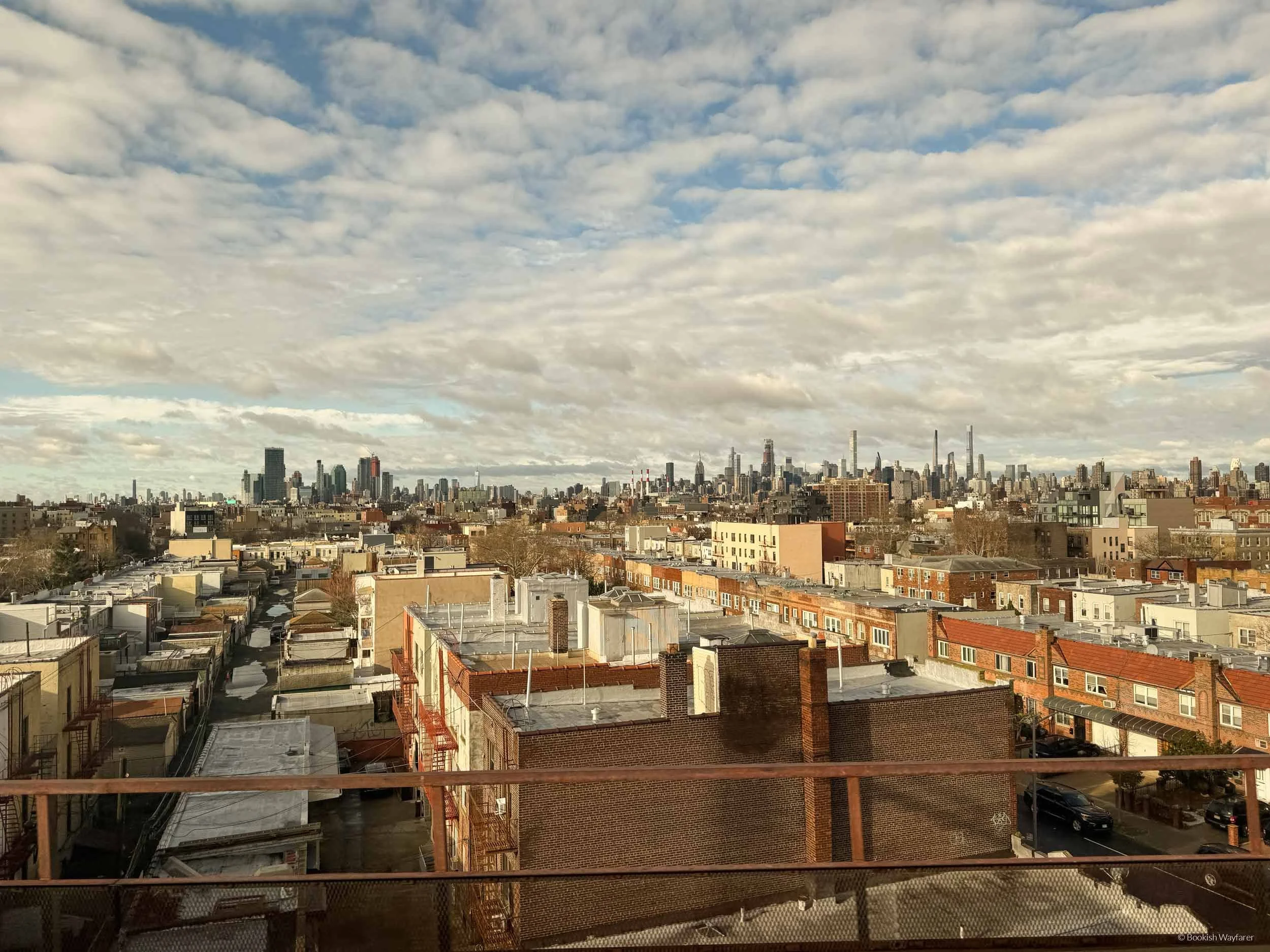
New York, New York — view of the city from my train window
Coach, Business, or First Class?
When booking a Northeast Regional ticket, you have the option to choose either coach or business class. As you would suspect, business class has more amenities, including a larger seat, additional legroom, and a complimentary, non-alcoholic drink. More importantly, though, a business-class ticket includes seat selection. In coach class, seating is on a first-come, first-served basis. If you want a forward-facing seat, you'd better arrive early and be among the first to board.
On Acela trains, there is no coach class; there is only business or first. Both classes include seat selection, but first has several additional perks, including at-seat service with complimentary meals and beverages, as well as access to Amtrak’s lounge at South Station.
I have only ever traveled in coach on the Northeast Regional and business on the Acela, so I cannot personally speak to the on-board experience of the Northeast Regional’s business class or the Acela’s first class. They’re too rich for my blood 😆
How Early Should I Arrive at South Station?
I recommend arriving 30 minutes prior to your scheduled departure. If, however, you require assistance with your baggage and/or ticketing, you should aim to arrive earlier (Amtrak suggests 60 minutes before departure).
How Does Boarding Work?
Boarding is fairly straightforward. Upon arriving at South Station, you want to check the large departure board inside the station; this is where the track number for your train will be listed. Please note that the route is typically labeled as “Washington, DC,” as that is the terminus of both the Northeast Regional and Acela lines.
Once you know the track number, you want to exit the station and head to that track (each track is clearly labeled). Unless a conductor or other staff member tells you otherwise, you can begin boarding the train. For Northeast Regional trains, business class is typically located in the rear of the train, but I’d double-check with an Amtrak employee before walking all the way to the end of the train.
Amtrak also offers priority boarding to certain passengers; please refer to the link to see if you qualify.

Inside one of the Northeast Regional’s coach cars
When Does My Ticket Get Checked?
In my experience, tickets generally get checked on board once the train has departed from South Station, but this is subject to change.
Where Does My Luggage Go?
You bring your luggage on board the train with you, unless you are checking it.* Much like on a plane, there is overhead storage on the train, and for larger, bulkier suitcases, there is typically a luggage rack in each car. Smaller, personal items, such as a backpack or purse, can go underneath the seat in front of you. Just be sure not to store any luggage on the seat next to you. Not only is it rude, but you’ll be asked by a conductor to move it.
*You are allowed one personal item and two carry-on items. Additionally, you can check up to four bags. For the most up-to-date baggage information, please see Amtrak’s website.
Helpful Tidbit
Speaking of luggage, if you arrive in New York before your hotel’s check-in time, you can ask your hotel to store your luggage until you return to check in (most hotels offer this service). If, however, you are just in New York for a layover but still want to explore the city without lugging around your suitcase, you can use Bounce to find a place to temporarily store your luggage. I’ve used Bounce on previous trips and have only had positive experiences with them.
What about Food and Restrooms?
There are bathrooms on board the train. In coach class on the Northeast Regional, there are two bathrooms per car.
You can purchase food on board from the café car, or in the case of first-class passengers on Acela, receive complimentary at-seat meals and beverages. Business-class passengers in a NextGen Acela train have access to cart service.
My Experience on the Northeast Regional Train
Last month, I traveled on the Northeast Regional train from Boston to New York City in coach class. Here is how it went.
Cost
Before delving into my on-board experience, let’s first go over pricing. How much did my coach-class ticket cost?
I traveled on Saturday, November 8 on Train 163, which departed from South Station at 11:40am. My one-way coach ticket cost $85.
Boarding
I arrived 20 minutes prior to my scheduled departure (I know, I don’t follow my own advice 😆), and fortunately, I didn’t have to go inside the station to find out my train’s assigned track number. There were only two Amtrak trains in the station, and they shared the same platform. So, I waited at the beginning of the platform for around five minutes until boarding began (i.e., until an Amtrak staff member moved the barricade blocking the rest of the platform). I was among the first people to board the train, so I had no difficulty securing a forward-facing seat or finding room for my suitcase.
Seats
Unlike their airplane counterparts, the coach seats aboard the Northeast Regional Train were surprisingly comfortable. There was a decent amount of legroom; I never once felt cramped. Moreover, the tray tables were appropriately sized, easily accommodating my MacBook Air.

In case you were wondering what a bathroom aboard Amtrak’s Northeast Regional looks like. This was one of the two in my coach car.
Food
The food options on board are admittedly not great. I’d say the food is on par with what you’d get on an airplane. As this was not my first time on the Northeast Regional, I knew about the lackluster food and packed my own lunch (a pasta salad with veggies and chickpeas).
Helpful Tidbit
If you also want to pack your own lunch (or dinner), I recommend using a small, compact lunchbox. I use this one by Mier, and what I love about it is that it easily fits into my backpack (i.e., my personal item). I also recommend bringing your own water bottle. The Northeast Regional train that I was on had a water dispenser in each car, and to save money, I used that to fill my Nalgene water bottle instead of buying bottled water at the café car.
On-Board Experience: Bathrooms, Wi-Fi, and Ride Feel, Oh My!
The train departed on time, promptly pulling out of the station at 11:40am. The train ride was mostly okay, but periodically, it’d become bumpy, which made walking in the train – and using the bathroom – a real treat. Speaking of bathrooms, they were about what you’d expect. They were larger than most plane bathrooms, and if you used them early on, they were fine. By the time we pulled into New York, however, they were a little worse for wear. Also, standing in the bathroom to wash my hands quickly became a balancing act whenever the train hit a rough spot on the tracks — plus side: my daily yoga practice finally paid off 😆
As for the Wi-Fi, it was adequate. It wasn’t super-fast, and at times, it’d go out when we passed through rural areas. That said, it was good enough for me to get some work done, and it was free, so I can’t complain too much.
Arrival in NYC
Our train arrived a few minutes late, and one of the train doors started to close on me as I was exiting (fun times). But other than that, it was fine. Exiting the platform to the train hall, however, was a bit chaotic, as everyone had to funnel up a few sets of escalators and elevators.
Overall
While not perfect, the Northeast Regional train is my preferred means of travel to New York City. Instead of sitting in traffic and wanting to pull my hair out, I can relax and let someone else do the “driving.” Plus, the train ride provides me with a few hours of uninterrupted work time – it’s a win-win.
As always, if you have any questions, feel free to ask me in the comments section below, and if you’re planning a New York getaway and looking for things to do, I’ve written quite a few posts on New York, ranging from things to see to where to eat.
-Julia
P.S. If you enjoyed this post, please consider supporting me on Buy Me a Coffee.
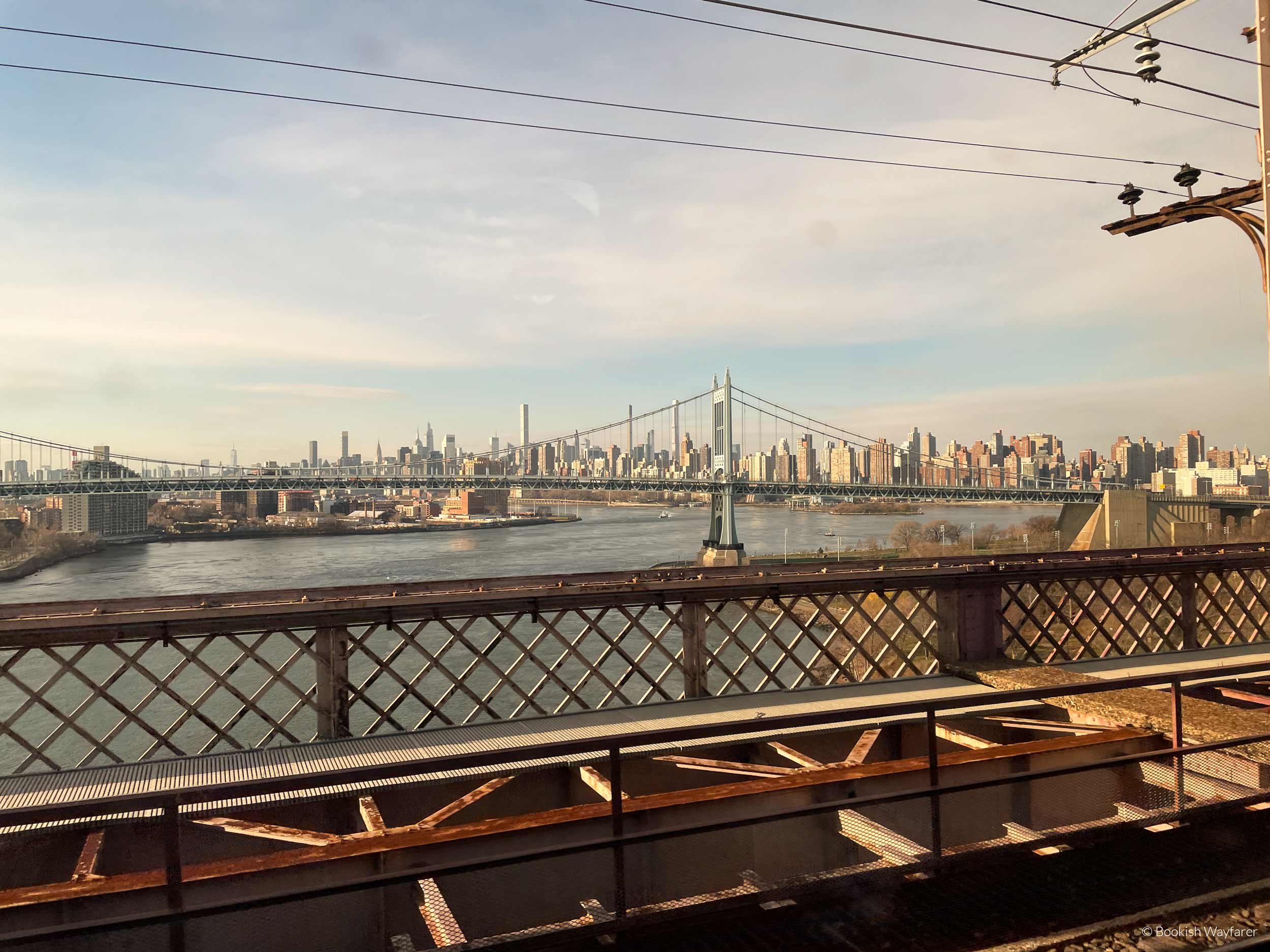

From booking tickets to boarding, learn all about how to travel by train from Boston to New York. I’ll also share my recent experience with Amtrak’s Northeast Regional train.